Showing posts with label Jerry Lee Lewis. Show all posts

Thursday, August 18, 2022

116. Blues: 7. Musical impact


How are you?

This week's lecture is “Musical impact”, the 7th and last topic of Blues, which is a summary of the contents of “116. Blues: 7. Musical impact” introduced on December 23rd, 2017.

The style, form, melody of blues music and the blues scale have influenced many other genres of music, such as rock and roll, jazz, and popular music. The blues scale is also frequently used in popular songs like Harold Arlen's "Blues in the Night", blues ballads such as "Since I Fell for You" and "Please Send Me Someone to Love", and even in orchestral pieces such as George Gershwin's "Rhapsody in Blue"


Harold Arlen


The blues scale can also be found in many places in modern popular music, and the blues forms are used in the theme to teen idol Fabian Forte's hit, "Turn Me Loose", country music star Jimmie Rodgers' music and guitarist and vocalist Tracy Chapman's hit "Give Me One Reason".


Fabian Forte


Jimmie Rodgers


Tracy Chapman


In the 1950s, soul music by Sam Cooke, Ray Charles and James Brown used elements of gospel and blues, and in the 1960s and 1970s gospel and blues were merged in soul blues music. Funk music of the 1970s was influenced by soul, and funk can be seen as a precursor to hip-hop and contemporary R&B, and R&B music can be traced back to spirituals and blues.


Sam Cooke


Although the boundary between blues and jazz wasn't clear before World War II, the jump blues of the 1940s mixed both styles. After World War II, blues had a significant influence on jazz, and bebop classics such as Charlie Parker's "Now's the Time" used the blues form.


Charlie Parker


Bebop brought a major change in the role of jazz, from a popular music style for dancing to a high art, less-accessible musician's music. As a result, the audience of both blues and jazz split and the boundary between the two genres became clearer. 

Blues also had a major influence on rock and roll music, where "Hound Dog" is a blues song adapted into a rock and roll song, and Jerry Lee Lewis' rock and roll style was heavily influenced by the blues and its derivative boogie-woogie.


Jerry Lee Lewis


Many early rock and roll songs such as "That's All Right Mama", "Johnny B. Goode", "Blue Suede Shoes", "Whole Lotta Shakin' Goin On", "Shake, Rattle, and Roll", and "Long Tall Sally" are based on blues. 

The 12-bar blues structure is also found in novelty pop songs such as Bob Dylan's "Obviously Five Believers" and Esther & Abi Ofarim's "Cinderella Rockefella".


Bob Dylan


Esther & Abi Ofarim


Early country music was infused with blues. Jimmie Rodgers, Moon Mullican, Bob Wills, Bill Monroe and Hank Williams all described themselves as blues singers. In the 1970s, many of "outlaw" country music by Willie Nelson and Waylon Jennings also borrowed from the blues.


Willie Nelson


With the end of today's lecture, “ACJ Music Academy” for over 3 years, started from the first lecture of "Russian Romance" on June 15, 2019, will end. From the next time, I will see you again with a new topic, “Interesting Music Stories,” introducing the stories of music and musicians of various music genres. I would like to express my sincere thanks to everyone who has watched my lectures with interest.


Thank you.


Amazon Author Page

Lecture Program List

YouTube

Twitter

Blog (Korean)

Naver TV

Naver Post


Friday, August 14, 2020

62. History of Rock Music: 1. Before The Beatles, ACJ Music Academy


How are you?

Following the last week, I am going to start my 62nd lecture.

From this week, I will start a new topic The History of Rock Music” which will last for 12 weeks, following the previous topic of “History of Pop Music.” 

The first topic of Rock Music for this week is “Before the Beatles.” This lecture is a summary of the contents of “62. History of Rock Music: 1. Before The Beatles, ACJ Music Academy” introduced on September 24, 2016.

The origin of Rock music is rock and roll, which was originated from late 1940s to early 1950s in the United States, and rock and roll was born from the fusion of rhythm and blues, gospel and country music. 

In 1951, Alan Freed, a disc jockey in Cleveland, Ohio began playing rhythm and blues music to multi-ethnic listeners, and he used the term “rock and roll” for the first time to describe this music. 

Alan Freed

Although controversial so far, the songs which might be considered as the first rock and roll song are: Fats Domino’s "The Fat Man (1949)”, Sister Rosetta Tharpe’s "Strange Things Happening Everyday (1944)”, Goree Carter’s "Rock Awhile (1949)”, Jimmy Preston’s "Rock the Joint (1949)” and Jackie Brenston and his Delta Cats’ "Rocket 88 (1951).” Elvis Presley's first single, "That's All Right (Mama)", recorded by Sun Records in Memphis in 1954, is also claimed to be the first rock and roll song.

Fats Domino

Sister Rosetta Tharpe

Bill Haley’s "Rock Around the Clock", used in the opening scene of the film “Blackboard Jungle” in 1955, was recorded as the first rock and roll song topped on the Billboard charts. This song sparked a rock and roll boom and became a breakthrough for the rock and roll music. This song has become one of the biggest hits in music history and agitated teenagers flocked to watch their performances, and riots broke out in some cities.

Bill Haley

Rock n roll has diminished the popularity of iconic pop singers of previous generations such as Eddie Fisher, Perry Como and Patti Page, and created a various subgenres of rock and roll such as rockabilly combined with “hillbilly” country music and rock and roll.

Rockabilly was played and recorded by mostly white singers in the mid-1950s, and representative musicians include Elvis Presley, Carl Perkins, Johnny Cash and Jerry Lee Lewis.

Elvis Presley

Carl Perkins

Rockabilly got certain popularity with successes such as Johnny Cash’s "Folsom Prison Blues", Carl Perkins’ "Blue Suede Shoes" and Elvis Presley’s "Heartbreak Hotel", and over the years this genre has become the most commercially successful genre of rock and roll. 

Johnny Cash

Since then, among rockabilly singers, especially Buddy Holly, a songwriter and performer, had a great influence on British Invasion singers, especially on the songs of The Beatles.

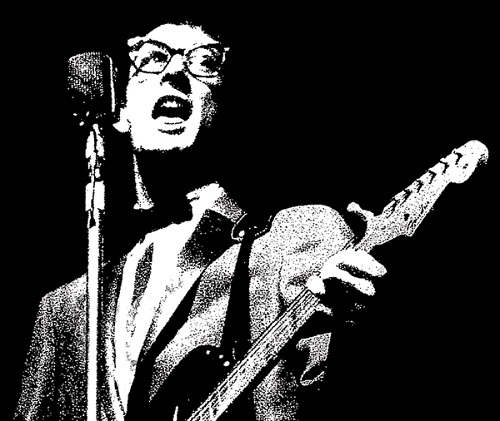
Buddy Holly

Electric guitars grew in popularity during this period, especially Chuck Berry, Link Wray and Scotty Moore, played a pioneering role in the development of playing styles of rock and roll.

Chuck Berry

Link Wray

Scotty Moore

Looking at the definition of the word “rock and roll,” the American Heritage Dictionary and Merriam-Webster Dictionary define rock and roll as synonymous with rock music, and Encyclopedia Britannica defines it as music that has created in the mid-1950s and developed as music encompassing a more global style known as rock music.

In general, critics see rock n roll's decline period as from the late 1950s to early 1960s. The reasons for the decline of the rock and roll era include the death of Buddy Holly, The Big Bopper and Richie Valens due to a plane accident in February 1959, the military enlistment of Elvis Presley in March 1958, Little Richard's retirement to became a missionary in October 1957, a scandal surrounding Jerry Lee Lewis over marriage to his 13-year-old cousin in May 1958, Chuck Berry's arrest for criminal offenses in December 1959 and the press releases for the bribery scandal of key figures including Alan Freed who received bribes for the promotion of certain singers or songs.

The Big Bopper

Richie Valens

Little Richard

Jerry Lee Lewis

You can also review this lecture from following media.

Next week, I will lecture 2nd topic “The Beatles Age.”

Thank you.


“Inferno Gates,” Rodin’s “The Gates of Hell” Reimagined as Music

Rodin’s sculpture represents a philosophical architecture of human suffering. J Music transforms this visual structure into cinematic sou...