Author, Lecturer, Broadcaster & Cultural Arts Expert;
President of Art Collage JANG/J Music/J Art/J Books & Media.
Author of over 40 books published on Amazon, including The Crimson Horror series and The Great and Immortal Painters’ Stories series.
Dedicated to sharing insights into art, culture, literature, and creative expression through writing, lectures, media, and content creation.
I had 42nd live
broadcast of “Pops Lounge” yesterday in TBN Ulsan Traffic Broadcasting
Network’s “Studio1041”. The greatest popular musician in music history I
introduced yesterday was “Elvis Presley”.
I uploaded content of yesterday's
broadcast on YouTube.
Studio 1041 “Pops Lounge” of TBN
Ulsan Traffic Broadcasting Network will be continued at 10:30 am every Tuesday.
Following the last week, I am going to
start my 62nd lecture.
From this week, I will start a new topic
“The History of Rock Music”
which will last for 12 weeks, following the previous topic of “History of Pop Music.”
The first topic of Rock Music for this week is “Before the Beatles.” This
lecture is a summary of the contents of “62. History of Rock Music: 1. Before
The Beatles, ACJ Music Academy” introduced on September 24, 2016.
The origin of
Rock music is rock and roll, which was originated from late 1940s to early
1950s in the United States, and rock and roll was born from the fusion of
rhythm and blues, gospel and country music.
In 1951, Alan Freed, a disc jockey
in Cleveland, Ohio began playing rhythm and blues music to multi-ethnic
listeners, and he used the term “rock and roll” for the first time to describe
this music.
Alan Freed
Although controversial so far, the songs which might be considered
as the first rock and roll song are: Fats Domino’s "The Fat Man (1949)”,
Sister Rosetta Tharpe’s "Strange Things Happening Everyday (1944)”, Goree
Carter’s "Rock Awhile (1949)”, Jimmy Preston’s "Rock the Joint
(1949)” and Jackie Brenston and his Delta Cats’ "Rocket 88 (1951).” Elvis
Presley's first single, "That's All Right (Mama)", recorded by Sun
Records in Memphis in 1954, is also claimed to be the first rock and roll song.
Fats Domino
Sister Rosetta Tharpe
Bill Haley’s
"Rock Around the Clock", used in the opening scene of the film
“Blackboard Jungle”in 1955, was recorded as the first rock and roll song
topped on the Billboard charts. This song sparked a rock and roll boom and
became a breakthrough for the rock and roll music. This song has become one of
the biggest hits in music history and agitated teenagers flocked to watch their
performances, and riots broke out in some cities.
Bill Haley
Rock n roll
has diminished the popularity of iconic pop singers of previous generations
such as Eddie Fisher, Perry Como and Patti Page, and created a various
subgenres of rock and roll such as rockabilly combined with “hillbilly” country
music and rock and roll.
Rockabilly was
played and recorded by mostly white singers in the mid-1950s, and
representative musicians include Elvis Presley, Carl Perkins, Johnny Cash and
Jerry Lee Lewis.
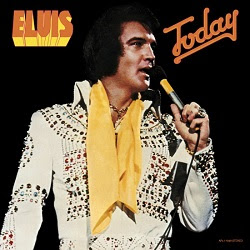
Elvis Presley
Carl Perkins
Rockabilly got
certain popularity with successes such as Johnny Cash’s "Folsom Prison
Blues", Carl Perkins’ "Blue Suede Shoes" and Elvis Presley’s
"Heartbreak Hotel", and over the years this genre has become the most
commercially successful genre of rock and roll.
Johnny Cash
Since then, among rockabilly
singers, especially Buddy Holly, a songwriter and performer, had a great
influence on British Invasion singers, especially on the songs of The Beatles.
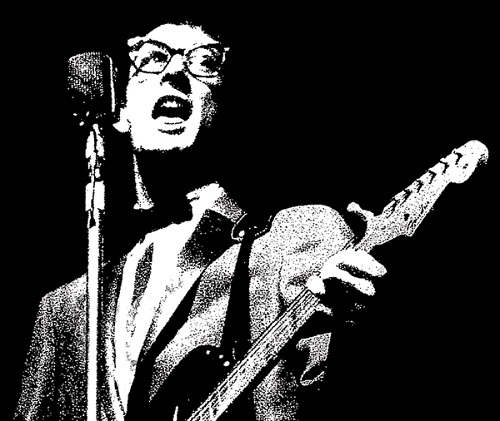
Buddy Holly
Electric
guitars grew in popularity during this period, especially Chuck Berry, Link
Wray and Scotty Moore, played a pioneering role in the development of playing
styles of rock and roll.
Chuck Berry
Link Wray
Scotty Moore
Looking at the
definition of the word “rock and roll,” the American Heritage Dictionary and
Merriam-Webster Dictionary define rock and roll as synonymous with rock music,
and Encyclopedia Britannica defines it as music that has created in the
mid-1950s and developed as music encompassing a more global style known as rock
music.
In general,
critics see rock n roll's decline period as from the late 1950s to early 1960s.
The reasons for the decline of the rock and roll era include the death of Buddy
Holly, The Big Bopper and Richie Valens due to a plane accident in February
1959, the military enlistment of Elvis Presley in March 1958, Little Richard's
retirement to became a missionary in October 1957, a scandal surrounding Jerry
Lee Lewis over marriage to his 13-year-old cousin in May 1958, Chuck Berry's
arrest for criminal offenses in December 1959 and the press releases for the
bribery scandal of key figures including Alan Freed who received bribes for the
promotion of certain singers or songs.
The Big Bopper
Richie Valens
Little Richard
Jerry Lee Lewis
You can also review this lecture from
following media.
Following the last week, I am going to
start my 56th lecture.
I had conducted music lectures at Art
Collage JANG in Seoul, South Korea every Saturday from March 2015 to December
2017. I am going to introduce the lecture by
the lecture’s order every Saturday.
Following the “History of Jazz”, which
lasted for 11 weeks until last week, I will lecture for 6 weeks with a new
topic of “History of Pop Music” from this week. The first topic of “History of Pop Music”
for this week is the '1950s'. It is a summary of the contents of “56th ACJ
Music Academy, History of Pop Music: 1. 1950s”, which was introduced on July
23, 2016.
In the United States, the 1950s was a time when
Rock and Roll, Classic Pop, Rhythm and Blues, Country and Rockabilly was very popular.
‘Rock and Roll' was a genre that dominated pop music
in the late 1950s. It was born and developed in the United States during the
late 1940s and early 1950s, and rapidly spread to other countries. Rock and
Roll is a genre of popular music from musical styles such as gospel, jump
blues, jazz, boogie woogie, rhythm and blues and country music.
Alan Freed, who
was a disc jockey in Cleveland, Ohio in 1951, used the term 'rock and roll' for
the first time for expressing rhythm and blues music when he began introducing
rhythm and blues music to audiences of various races.
Alan Freed
Chuck Berry is regarded
as one of the pioneers of Rock and Roll music, and he created and developed
elements that differentiate Rock and Roll by introducing guitar solo and
showmanship.
Chuck Berry
The Rock and Roll era began with the film "The Blackboard
Jungle", which was released in 1955. Bill Haley and His Comets' "(We’re
Gonna) Rock Around the Clock", which was included in the film, provoked a
sensation in the United States.
The poster of film "Blackboard Jungle" (1955)
Elvis Presley debuted as a singer in the
mid-1950s and became a leading musician in Rock and Roll with TV appearances,
films and released albums.
Elvis Presley
'Classic Pop'dominated the music charts in the
first half of the 1950s. At this time, Patti Page released "Tennessee
Waltz", the greatest hit at the time, and Nat "King" Cole
dominated the music charts throughout the era with songs such as "Unforgettable",
"Mona Lisa" and "Too Young". However, the popularity of
Classic Pop dropped as Rock and Roll entered the mainstream.
Patti Page
For ‘Rhythm and Blues’, Little Richard made serial
hits of Rhythm and Blues songs, starting with "Tutti Frutti" and
"Long Tall Sally" in 1955 and 1956, affecting singers such as James
Brown, Elvis Presley and Otis Redding.
Little Richard
'Blues', along with the passionate playing style of
musicians like Bo Diddley, had a major influence on the mainstream of American
popular music in the 1950s. Ray Charles and Fats Domino contributed to bring Blues
music to the popular music stage, and Fats Domino in particular presented “Boogie-woogie”
style that was greatly influenced by Rock and Roll.
Fats Domino
For 'Country' music, Country music stars in the
early 1950s include Hank Williams, Patsy Cline, Chet Atkins and Kitty Wells. Kitty
Wells released her hit song "It Wasn't God Who Made Honky Tonk
Angels" in 1952 and this song was the first single to be ranked number one
on the American Country Chart as a female solo singer.
Kitty Wells
“Nashville sound” in the
late 1950s was a response to the Country genre, which was constantly eroded by
rock stars. Eddy Arnold and Jim Reeves were early pioneers of the Nashville
sound style and had great success in the 1960s. One of the early Nashville
sound hits was Don Gibson's "Oh, Lonesome Me”.
Don Gibson
In the early 1950s, 'Rockabilly', the fusion of
Rock and Roll and Country, was born and it became the most popular genre to Country
music fans in the 1950s. The representative musicians include Carl Perkins,
Jerry Lee Lewis and Buddy Holly. However, in 1958, as many Rockabilly musicians
returned to mainstream style or created their own styles, Rockabilly gradually
disappeared from popular music area.
Buddy Holly
As another music genre, Jamaican-American musician Harry
Belafonte popularized the Caribbean music style “Calypso”. This music style excited
the world after the release of the traditional Jamaican folk song "Banana
Boat Song" from his album “Calypso”, released in 1956, and Belafonte was
called "The King of Calypso".
Harry Belafonte
You can also review this lecture from
following media.


.jpg)