Showing posts with label ACJ Art Academy. Show all posts

Friday, December 16, 2022

Interesting Art Stories: 81. Tennis at Newport, George Bellows


How are you?

Currently, I am introducing the stories about various artists and their paintings with the title “Interesting Art Stories”.

The 81st story is the “Tennis at Newport” by George Bellows.

“Tennis at Newport” is a 1919 oil on canvas painting by the American artist George Bellows that depicts one of the major events of high society, the “Newport Casino Invitational” held at the Newport Casino.

George Bellows was an American realist painter, born in August 12, 1882 and died in January 8, 1925, known for his bold depictions of New York City’s life and described as "the most acclaimed American artist of his generation".


George Bellows


A member of the Ashcan School, an artistic movement that took place in the United States during the late 19th and early 20th centuries, often depicting scenes of daily life in New York's impoverished neighborhoods, Bellows was instrumental in the organization of the 1913 Armory show in New York.


Armory Show, NYC (1913)


Renowned for his paintings of boxing matches, Bellows also depicted leisure activities of the wealthy.


Dempsey and Firpo, George Bellows (1924)


He painted “Tennis at Newport” in his New York studio based on sketches he made the previous summer. The annual tennis tournament held at the Newport Casino in Newport, Rhode Island, was an important sporting and social event.

Covered in light, the painting focuses on the image of the spectators rather than the players, emphasizing the setting around the match rather than the match itself. In the painting, the players appear to be playing in the foreground, but the spectators strolling the grounds and lingering on the lawn attract viewer's attention and divert the viewer’s attention away from the contest. Bellows’ unique brushwork and the palette used in the painting bring the eerily pale ghostly spectator image with bright, almost blinding light and sweltering heat together.


Thank you.


“Modigliani with Themes” NewsLetter (December 17, 2022)

“Interesting Art Stories” InternetLecture

Amazon Author Page

Lecture Program List

YouTube

Twitter

Korean Blog

Naver TV

Naver Post


Friday, November 4, 2022

Interesting Art Stories: 80. Young Sick Bacchus, Caravaggio


How are you?

Currently, I am introducing the stories about various artists and their paintings with the title “Interesting Art Stories”.

The 80th story is the “Young Sick Bacchus” by Caravaggio.

The “Young Sick Bacchus” is an early self-portrait by the Baroque artist Caravaggio, painted between 1593 and 1594, which is now in the collection of the Galleria Borghese in Rome. According to Giovanni Baglione, Caravaggio's first biographer, it was a cabinet piece by the artist using a mirror.


Portrait of Caravaggio, Ottavio Leoni
(c. 1621)


Galleria Borghese


Caravaggio created this painting after arriving in Rome from his hometown of Milan in mid-1592. According to a 2009 article in the American medical publication "Clinical Infectious Diseases", since the figure shows jaundice in his skin and the eyes, which are indications of some active hepatic disease that causes high levels of bilirubin, the artist’s physical disease likely involved malaria. The “Young Sick Bacchus” was one of the collections of Giuseppe Cesari, one of Caravaggio's early employers, and in 1607, the art collector Cardinal Scipione Borghese acquired the painting, together with the artist’s “Boy peeling fruit” and “Boy with a basket of fruit.”


Boy Peeling Fruit, Caravaggio (c. 1592
–1593)


Boy with a Basket of Fruit, Caravaggio
(c.1593)


It is also likely that this painting was used by Caravaggio to promote himself, demonstrating his virtuosity in painting genres such as still life and portraits and alluding to his ability to paint classical figures of antiquity, but what stands out in the painting is the grimace, tilt of the head, and a realistic expression of the pain the artist felt.

The still life in the painting can be compared with that included in slightly later works such as the “Boy with a basket of fruit” and the “Boy bitten by a lizard”, where the fruits are in a much better condition, reflecting the artist’s improved physical and mental condition.


Boy Bitten by a Lizard, Caravaggio (1593
–1594)


The painting also shows the influence of his teacher Simone Peterzano, in the utilization of the tensed musculature depiction, and of the Lombard school style in its attention to realistic details.

Cindy Sherman, the American artist, created a self-portrait titled “Untitled # 224”, a parody of the “Young Sick Bacchus,” as part of her “History Portrait” series.


Untitled #224, Cindy Sherman, MoMA
(1990)


Thank you.


Seungyong Chang’s Culture and Art Stories (Naver Premium Contents Studio)

Amazon Author Page

Lecture Program List

YouTube

Twitter

Korean Blog

Naver TV

Naver Post


Saturday, September 10, 2022

Interesting Art Stories: 79. Manuel Osorio Manrique de Zúñiga, Francisco Goya


How are you?

Currently, I am introducing the stories about various artists and their paintings with the title “Interesting Art Stories”.

The 79th story is the “Manuel Osorio Manrique de Zúñiga” by Francisco Goya.

“Manuel Osorio Manrique de Zúñiga” is a 1787-88 oil painting of the large full-length portrait by the Spanish artist Francisco Goya. The painting depicts a boy, standing in red clothes, with birds and cats. It is now in the collection of the Metropolitan Museum of Art in New York.


Portrait of Goya, Vicente López Portaña
(c. 1826)


The painting was commissioned by Vicente Joaquín Osorio de Moscoso y Guzmán, the boy's father and conde de Altamira. He was one of the six dignitaries of the newly established Banco de San Carlos, painted by Goya between 1785 and 1788. 


Portrait of Vicente Joaquín Osorio de
Moscoso y Guzmán, Francisco Goya (1787)


In 1786, Goya was nominated painter to Charles III, and from 1789 he continued as a court painter of his successor, Charles IV.


Charles III of Spain, Anton Raphael Mengs
(c. 1761)


Conde de Altamira commissioned Goya for several family portraits, and the painting depicts his youngest son, Manuel. Goya also painted a portrait of his other son, Vicente Isabel Osorio de Moscoso y Álvarez de Toledo, and a portrait of his wife María Ignacia Álvarez de Toledo y Gonzaga with their daughter María Agustina.


Portrait of Vicente Isabel Osorio de
Moscoso, Francisco Goya (1786–87)


María Ignacia Álvarez de Toledo y
Gonzaga and her daughter,Francisco
Goya  (1787–88)


The pets in this portrait have been interpreted in many different ways, one of which is the caged birds as innocent souls and the cats as evil forces. An example of this is Goya's showing a cat amongst the various creatures in his "The Sleep of Reason Produces Monsters", part of "The Caprices".


The sleep of reason produces monsters, Los
Caprichos, Francisco Goya (c. 1799)


Thank you.


Amazon Author Page

Lecture Program List

YouTube

Twitter

Korean Blog

Naver TV

Naver Post


Friday, August 12, 2022

Interesting Art Stories: 78. Portrait of Juan de Pareja, Diego Velázquez


How are you?

Currently, I am introducing the stories about various artists and their paintings with the title “Interesting Art Stories”.

The 78th story is the “Portrait of Juan de Pareja” by Diego Velázquez.

The “Portrait of Juan de Pareja” is a painting by Spanish artist Diego Velázquez of his assistant, Juan de Pareja, a prominent painter, who was enslaved and owned by Velázquez when the painting was completed. Velázquez painted this portrait in Rome during traveling in Italy in 1650, which is the earliest known portrait of a Spanish man of African descent.


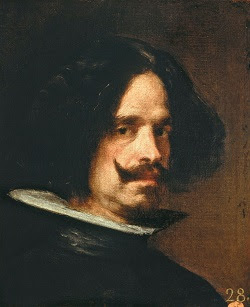
Self-portrait, Diego Velázquez (c.1640)


It was also the first painting to sell for more than £1 million, and when the Metropolitan Museum of Art, currently possessing the painting, purchased it in 1970, they considered it "one of the most important collections in the history of the Museum."

In 1649, Diego Velázquez, court painter of Philip IV of Spain, took Juan de Pareja, a slave who worked as his assistant in the artist's studio, when he was sent to Rome to purchase artworks for the Alcázar Palace. 


Portrait of Philip IV in Fraga, Diego
Velázquez (c.1644)


During his stay in Rome, Velázquez painted an oil painting of Juan de Pareja, which was displayed in a large-scale painting exhibition at the Pantheon on March 19, 1650. In his studio, Velázquez painted the “Portrait of Juan de Pareja”, a Morisco from the city of Antequera, in southern Spain, as an exercise for the official portrait of Pope Innocent X.


Portrait of Pope Innocent X, Diego
Velázquez (c.1650)


However, the Pope placed demanding orders in both color and composition, and Velázquez, who painted a portrait from life, had to work quickly, capturing the essence of Innocent X. Juan de Pareja was freed by Velázquez in 1654.

For some examples of the painting's impact on popular culture, this portrait inspired the 1965 novel "I, Juan de Pareja” by American writer Elizabeth Borton de Treviño.


"I, Juan de Pareja", Elizabeth Borton de
Treviño (1965)


This painting was reinterpreted by surrealist painter Salvador Dalí in "Portrait of Juan de Pareja, the Assistant to Velázquez" (1960), which is now in the collection of the Minneapolis Institute of Art.


Portrait of Juan de Pareja, the Assistant to Velázquez,
Salvador Dali (1960)


A central theme of an American playwright Ayad Akhtar's 2012 play, “Disgraced”, is a painting of the protagonist, a South Asian Muslim man, painted in the style of the “Portrait of Juan de Pareja” by his white wife.


Disgraced, Ayad Akhtar (2012)


Thank you.


Amazon Author Page

Lecture Program List

YouTube

Twitter

Korean Blog

Naver TV

Naver Post


“Where Our Memories Meet” ✨ | A Dreamy Romantic Piano Ballad | J Music

Some films leave us with more than a story.  They leave us with a feeling that returns unexpectedly: a memory of someone we once loved, the ...