Showing posts with label History of Rock Music. Show all posts

Friday, November 6, 2020

73. History of Rock Music: 12. Industrial Rock/Metal, ACJ Music Academy


How are you?

Following the last week, I am going to start my 73rd lecture.

The topic for this week is “Industrial Rock/Metal”, the 12th and last topic of “The History of Rock”.

This lecture is a summary of the contents of “73. History of Rock Music: 12. Industrial Rock/Metal” introduced on December 23, 2016.

Industrial rock is a music genre that is a mixture of industrial music and a specific sub-genre of rock, and is often used without distinction from Industrial metal genre. The early fusion of industrial music and rock was attempted by a few post-punk groups, including Chrome, Killing Joke and Swans.

Killing Joke


Industrial rock artists use electronic musical instruments such as synthesizers, sequencers, samplers, and drum machines along with electric guitars, drums, and bass, which are common rock playing instruments. Guitars generally use heavy distortion, and bass guitar and drum sounds are actual playing, or replaced by electronic musical instruments or computers. Industrial rock also uses mechanical or industrial sounds, and this sound composition was pioneered by artists such as SPK and Einstürzende Neubauten in the early 1980s.
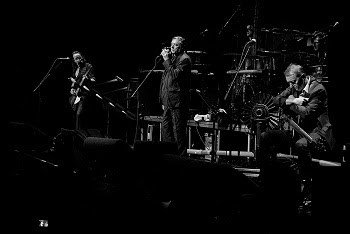
Einstürzende Neubauten


Cromagnon, an experimental music group in the '60s, is regarded as one of the bands that helped predict the birth of industrial rock, and their song "Caledonia" attracted attention as "pre-industrial stomp".

Cromagnon


The artists who have contributed greatly to bringing this genre into the mainstream include Nine Inch Nails and Marilyn Manson.

Nine Inch Nails


Marilyn Manson


Industrial Metal uses repetitive metal guitar riffs, sampling, synthesizers or sequencers and distortion, and representative industrial metal groups include Ministry and Godflesh.

Godflesh


In the late 1980s, with Godflesh's same title album and Ministry's album "The Land of Rape and Honey" as leaders, industrial music and heavy metal began to be mixed into one common genre, and as a result, industrial metal was born.

Godflesh, Godflesh (1988)


The Land of Rape and Honey, Ministry
(1988)


Industrial metal was particularly popular in North America in the early 1990s and became the first commercial genre in 1992, when Nine Inch Nails' album “Broken” and Ministry's album “Psalm 69” recorded platinum in the US. Following the success of Nine Inch Nails in this genre, Marilyn Manson gained popularity, but their behaviors against conventions in their live performances caused more controversy than their music.

Broken, Nine Inch Nails (1992)


Psalm 69, Ministry (1992)


Industrial metal reached its peak commercially in the second half of the 1990s, but in the 21st century, it faced great difficulties due to social backlash. Accordingly, many industrial metal groups tried to change their sounds by mixing hip-hop or electronic music, and as a result, the band such as Powerman 5000 is sometimes referred to as nu metal band as well as industrial metal band.

Powerman 5000


You can also review this lecture from following media.


Related Music

Amazon Author Page

Lecture Program List

YouTube

Blog (Korean)

Naver TV

Naver Post


Thank you.


Friday, October 30, 2020

72. History of Rock Music: 11. Nu metal, ACJ Music Academy


How are you?

Following the last week, I am going to start my 72nd lecture.

The topic for this week is “Nu metal”, the 11th theme of “The History of Rock”.

This lecture is a summary of the contents of “72. History of Rock Music: 11. Nu metal” introduced on December 10, 2016.

Nu metal” is a subgenre of alternative metal that combines heavy metal with elements of other music genres such as hip hop, alternative rock, funk, and grunge. Nu metal is based on guitar riffs instead of guitar solos, and many nu metal guitarists use down-tuned seven-string guitars for a heavier sound. Sometimes DJs are joined in nu metal to add sampling, turntable scratching and electronic background music. 

Nu Metal is one of the major genres of “New Wave of American Heavy Metal”. In contrast to many heavy metal’s subgenres, female musicians participates in nu metal. The Kittie is one of all female bands and there are also bands in which at least one female member participated, such as Coal Chamber and Otep

Otep


Some nu metal bands, such as Limp Bizkit and Linkin’ Park, even use rap in their music. Many of the lyrics of Nu Metal are about rage or nihilism, and Drowning Pool's nu metal song "Bodies" is about moshing. Nu metal bands sometimes join hip hop musicians in their songs. The Korn's song "Children of the Korn" was accompanied by rapper Ice Cube, and the Linkin’ Park collaborated with hip hop musician Jay Z in their album “Collision Course” released in 2004.

Limp Bizkit


Korn, who released "Neidermayer's Mind" in 1993, is considered a pioneer of nu metal, and Korn's same title album released in 1994 is considered the first nu metal album. Korn's aggressive riff, Limp Bizkit's rapping and Staind’s melodic ballad created a musical template of nu metal.

Korn, Korn (1994)


The year of 1998 is a period when Korn's third album “Follow the Leader” topped the Billboard 200 chart and opened the way for other nu metal bands, and the year is considered the first year when Nu Metal entered the mainstream.


Korn


Nu Metal's popularity lasted until the early 2000s with Papa Roach, Staind and P.O.D., and peaked in popularity with Linkin’ Park's hit album "Hybrid Theory". However, in the mid-2000s, its popularity declined due to the overflow of the number of bands and the decrease in performances of popular bands, and many of the bands surviving in this genre abandoned Nu Metal and turned to other genres.


Hybrid Theory, Linkin Park (2000)


The 2010s were the period, showing the possibility of nu metal’s revival, with the fusion bands that mixed nu metal with other genres, the return of existing bands to nu metal, and the formation of new nu metal bands. Despite the lack of radio broadcasts and popularity, some nu metal bands regained their former popularity by releasing new albums in the style of nu metal. 

Nu Metal also influenced Metalcore and Deathcore bands such as Emmure, Here Comes the Kraken, Suicide Silence, Of Mice & Men, and Issues.


Here Comes the Kraken


You can also review this lecture from following media.


Related Music

Amazon Author Page

Lecture Program List

YouTube

Blog (Korean)

Naver TV

Naver Post


Thank you.


Friday, October 9, 2020

69. History of Rock Music: 8. Extreme Metal, ACJ Music Academy


How are you?

Following the last week, I am going to start my 69th lecture.

The topic for this week is “Extreme metal”, the 8th theme of “The History of Rock”.

This lecture is a summary of the contents of “69. History of Rock Music: 8. Extreme metal” introduced on November 19, 2016.

“Extreme metal” is a term that comprehensively defines a number of subgenres related to heavy metal that have developed since the early 1980s. This genre is generally more aggressive and harsher than other metal styles, normally with lyrics of dark and sensational themes, and covers themes that go beyond moral and religious limits.

The main genres of the Extreme metal are Black metal, Death metal, Doom metal, Speed metal and Thrash metal.

Black metal emphasizes heavily distorted guitar sound with fast tempo, screaming vocal style and tremolo picking. Representative bands of Black metal include Venom, Mercyful Fate, Celtic Frost and Mayhem. Black metal expresses extreme anti-christism and advocates Satanism that makes inaccessible to the majority of people, and mainstream culture is hostile to the genre. 

Venom


Death metal uses techniques such as palm muting and tremolo picking with a low-tuned guitar adding heavy distortion, and is characterized by growling vocals, screams, and aggressive and powerful drumming. The theme of the lyrics covers violence, Satanism, supernaturalism and mysticism. The pioneers in this genre include Obituary, Morbid Angel and Possessed.

Morbid Angel


Doom metal generally uses a slower tempo, a lower-tuned guitar, and a heavier sound than other metal genres. The music and lyrics deal with the feelings of despair, fear and perdition to come, and were greatly influenced by Black Sabbath's early works. Pagan Altar, Saint Vitus and Candlemass are bands that have contributed greatly to defining Doom Metal as a unique genre.

Candlemass


Speed metal originated in the late 1970s, rooted in “New Wave of British Heavy Metal (NWOBHM)” and is defined as “extremely fast, harsh and skillful music”. Exciter, a Canadian Speed metal band formed in 1978, is considered one of the first Speed metal bands, and Accept, a heavy metal band from Germany, contributed greatly to the development of this genre.

Exciter


Thrash metal is characterized by a fast tempo and overall aggressive music, typically using fast percussion beats and low-end guitar riffs. The lyrics covers social issues and criticizes the privileged class with straightforward and threatening language. Thrash metal influenced on subsequent extreme metal genres such as Death metal and Black metal. Anthrax, Megadeth, Metallica and Slayer are the four major groups that pioneered this genre and gained popularity.

Slayer


Next week, I will lecture 9th topic “Punk”.

Thank you.


Friday, September 25, 2020

68. History of Rock Music: 7. Garage Rock, ACJ Music Academy


How are you?

Following the last week, I am going to start my 68th lecture.

The topic for this week is “Garage Rock”, the 7th theme of “The History of Rock”.

This lecture is a summary of the contents of “68. History of Rock Music: 7. Garage Rock” introduced on November 12, 2016.

Garage rock is a style of rock and roll that gained popularity mainly in the US and Canada in the mid-1960s. The term garage rock was derived from the fact that many of the musicians of this genre are young amateurs and often practiced in the garages of their homes, and garage bands refer to bands that are included in this genre. 

A pioneer of psychedelic rock, this genre is characterized by powerful sound having an amateurish feeling, innocent feeling, or intentionally not-refined feeling along with the distortion sound of a guitar using a fuzzbox

In the mid-1960s, Garage Rock had a completely different influence than before. It was the first visit of the Beatles in the United States in February 1964, following by the birth of British Invasion leading bands from 1964 to 1966. As the result, many bands in the United States changed their musical styles and it became a stimulus for many young people to form bands. 

The Beatles arriving at John F. Kennedy International Airport
(7 February 1964)


Garage bands were particularly influenced by harder, blues-based British beat groups such as the Kinks, the Who, the Animals, the Yardbirds, and the Rolling Stones

Many garage bands have also been formed outside North America, among which British band the Troggs has achieved worldwide success with the song "Wild Thing." One of the first successful garage bands across the United States was the Beau Brummels, who released songs "Laugh, Laugh" and "Just a Little." 

The Troggs


Garage Rock was not exclusively for men, and many all-female bands playing musical instruments were born. One of these earliest bands is Goldie and the Gingerbreads from New York, and The Luv'd Ones from Michigan is best known for their song "Up Down Sue."

Goldie and the Gingerbreads


The Pleasure Seekers from Detroit, formed in 1964, was a band which Suzi Quatro, who later became famous solo rockers, and her sisters were members and the band changed its name to the Cradle band in 1969, changing their music style to a heavier sound than before.

The Pleasure Seekers


Around 1966, the popularity of garage rock reached its peak, but after 1968, as more sophisticated types of rock music took over the music market, garage rock's popularity began to decline. 

New styles of music such as psychedelic rock, acid rock, progressive rock, heavy metal, country rock and bubblegum pop were born or replaced garage rock. At the end of 1968, garage rock mostly disappeared from the music charts, and the Balloon Farm band's song "Question of Temperature" was one of the last songs in the genre, with some hits.

Balloon Farm


Garage rock, which initially had no special name and was not recognized as a separate genre, began to be classified as a specific genre from the early 1970s, when it was mostly disappeared. 

In an effort to define it as a separate genre, some critics in the early 1970s referred to this style as "garage punk", "protopunk" or "60s punk", and distinguished it from the genre commonly known as punk rock in the mid and late 1970s.


You can also review this lecture from following media.


Related Music

Amazon Author Page

Lecture Program List

YouTube

Blog (Korean)

Naver TV

Naver Post


Next week, I will lecture 8th topic “Extreme Metal”.


Thank you.


“After the Last Blue” — An Intimate Female Vocal Jazz Ballad for Midnight

“After the Last Blue” is an original female vocal jazz ballad, combining an intimate female vocal with warm jazz guitar, upright bass, deli...