Showing posts with label Venice. Show all posts

Monday, March 7, 2022

Amedeo Modigliani in Worldwide Museums: 9. The Peggy Guggenheim Collection


How are you?


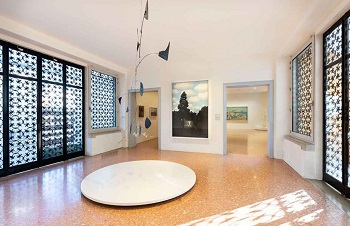
The 9th place I would like to introduce for this week is The Peggy Guggenheim Collection in Venice, Italy.


The Peggy Guggenheim Collection is a modern art museum on the
Canal Grande in the Dorsoduro sestiere of Venice, Italy, and It is one of the most visited tourist attractions in Venice. 


The museum's collection is housed in an 18th-century palace, the Palazzo Venier dei Leoni, which was the home of the American heiress Peggy Guggenheim for three decades. She began exhibiting her own collection of modern artworks to the public seasonally in 1951. After her death in 1979, the collection passed to the Solomon R. Guggenheim Foundation, which opened the collection to the public year-round from 1980.


Peggy Guggenheim (c.1930)


The collection includes works of famous Italian Futurists and American Modernists in genres such as Cubism, Surrealism and Abstract Expressionism, as well as sculptures. In 2017, Karole Vail, a granddaughter of Peggy Guggenheim, was appointed Director of the collection, succeeding Philip Rylands, who led the museum for 37 years.


The works of Modigliani currently in the possession of The Peggy Guggenheim Collection are as follows.


Woman in a Sailor Shirt (1916)


Thank you.


Amazon Author Page

Lecture Program List

YouTube

Korean Blog

Naver TV


Saturday, February 22, 2020

ARTIST OF THE WEEK: 17. CANALETTO


Name: Canaletto
Born: 18 October 1697, Venice, Italy
Died: 19 April 1768, Venice, Italy
Active Years: 1719 - 1765
Nationality: Italian
Art Movement: Baroque, Rococo
Genre: Cityscape
Field: Painting, Printmaking

Giovanni Antonio Canal, commonly known as Canaletto, was an Italian painter of city views or vedute, of Venice, Rome, and London. He also painted imaginary views, although the demarcation in his works between the real and the imaginary is never quite clearcut. He was further an important printmaker using the etching technique. In the period from 1746 to 1756 he worked in England where he painted many views of London and other sites including Warwick Castle and Alnwick Castle. He was highly successful in England, thanks to the British merchant and connoisseur Joseph "Consul" Smith, whose large collection of Canaletto's works was sold to King George III in 1762.

FAMOUS WORKS


RELATED ARTISTS


Currently, “J art”, an internet mall of “Art Collage JANG” is selling artprints of worldwide famous artists.

In relation with this sale, I will introduce one by one every week, whose artprints are on the sale list, by following categories.

1. Artist’s Bio: Introduce brief bio of selected artist
2. Famous Works: Move to the corresponding artprints in J art by clicking
3. All Works List: Move to all works of selected artist in J art by clicking
4. Related Artists: Move to the works of the artists in J art, who are related to the selected artist.
5. All Artists List: Move to the list of all artists selling artprints in J art

Monday, December 30, 2019

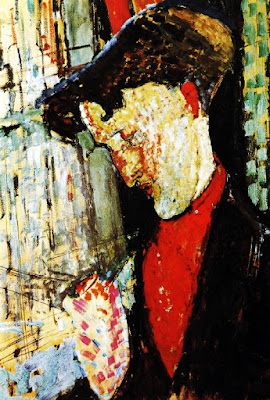
The Introduction of the Works by Amedeo Modigliani: 26. Portrait of Frank Burty Haviland (1914)


How are you?

Modigliani Institute Korea (MIK) is currently introducing artworks of Amedeo Modigliani one by one every week.

The 26th work to introduce for this week is “Portrait of Frank Burty Haviland (1914)”.

This work is a portrait of an expressionist style and an oil painting on cardboard with the size of 72.5 x 59.5 cm.

It is currently owned by the Peggy Guggenheim Collection in Venice, Italy.

The model for this work, “Frank Burty Haviland,” was a French cubist painter who was born on October 16, 1886 in Limoges and died in Perpignan in November 1971. He was a friend and a client of Picasso and Braque, and a collector of African art. 

Haviland was also the grandson of "Philippe Burty", an art collector and critic who coined the term "japonisme." Philippe's daughter, Madeline Burty, married Charles Haviland, the owner of the porcelain company "Haviland and Company".

Haviland lived most of his life in Céret and was one of the driving forces behind the creation of the “Musée d'Art Moderne de Céret,” founded in 1950. He also helped the museum acquire 14 works by Henri Matisse and over 50 works by Pablo Picasso.

Painted in Paris by Modigliani in 1914, this portrait marks his return to painting after a period of more than four years dedicated to sculpture. Haviland, who had a large collection of African sculptures, became close with Modigliani when he gave up sculpture and returned to painting.

In addition to this work by Modigliani, Havilland was presumed to be a model of “The Smoker (1913)” by Juan Gris and “Le Rouquin (1917~1919)” by Chaim Soutine.

In this work, Modigliani portrays the head of Haviland as if it were a sculpture made of stone. The biggest reasons why Modigliani abandoned the sculpture were that it was difficult to obtain the stone for the sculpture due to the war, and his health was deteriorated due to the work on engraving. Therefore, this work shows that although Modigliani had returned to painting, he still had some regrets about the sculpture and thus it is thought that Modigliani expressed Haviland's head as a sculpture to reflect his regret in this work.

Modigliani also experimented with various styles, trying to establish his definitive style by returning from sculpture to painting, and this work illustrates such efforts of Modigliani. For example, in this work, the elements of "Pointillism" as well as those of "Fauvism" in intense colors, were reflected. However, the techniques of Pointillism used by Modigliani are not systematic but intuitive and free.

It can be seen that they differ from the theoretical and systematic Pointillism techniques applied by Georges Seurat and Paul Signac, who were the representative artists of the Pointillism. In other words, Modigliani's use of the Pointillism techniques in this work is entirely experimental and temporary. As mentioned earlier, Modigliani was trying to find his definitive style, so it seems that he could try various styles in this work without the obligation and restrictions of using a specific style.

It is certain that Modigliani intentionally elongated the head of Haviland in a way that reflected the influence of the African sculptures which Modigliani was fascinated and the fact that Haviland was an ardent collector of African art.

Also, in this work, the image of Haviland, with the red cravat, brown jacket, the aquiline nose, small mouth and central parting of the hair, shows a sophisticated aesthetic such as Oscar Wilde, who was an Irish poet and playwright, reflecting that Haviland is a sophisticated artist from a wealthy family.

And the deeply thoughtful appearance of Havilland, holding a pipe in his hand and staring down, seems to suggest that he was a cautious and speculative artist.

Thank you.

Friday, November 1, 2019

The Introduction of the Works by Amedeo Modigliani: 15. Sorrowful Nude (1908)


How are you?

Modigliani Institute Korea (MIK) is currently introducing artworks of Amedeo Modigliani one by one every week.

The 15th work to introduce for this week is “Sorrowful Nude (1908)”.

This work is, a portrait of an expressionist style and an oil painting on canvas with the size of 81 x 54 cm, painted by Modigliani in 1908.

In 1903, when Modigliani studied art in Venice, he shared a studio with his friend Oscar Ghiglia, who studied art together in his hometown of Livorno.

In 1903, Oscar exhibited a rather traditional portrait of a woman at the Venice Biennale.

There were many works of French Impressionists at the exhibition, but there were also a number of surreal and dreamy works that could be classified as Symbolism.

Modigliani, who loved the poems of Baudelaire and Rimbaud, who were Symbolist poets, was strongly impressed by these Symbolists’ works.

Unlike the Impressionism, which was confined to France, the Symbolism was a Pan-European movement that took place in many European countries at the end of the 19th century, and the Symbolists pursued anti-realism rather than the visible reality.

Since currently there remained very few paintings that Modigliani painted when he was an art student, it is difficult to ascertain whether he was directly affected by Symbolism.

However, in some works during his first years after moving to Paris, it is certain that Modigliani used Symbolic themes, and one of which is the "Sorrowful Nude”, which I introduce today.

The loneliness and body’s lines of the woman in this work are very similar to “Mother grieving over her Dead Child” by George Minne, who was a Belgian Art Nouveau artist and sculptor, or “Madonna” by Edvard Munch, who was a Norwegian Expressionist/Symbolist painter.

Pain and ecstasy are felt at the same time from the woman with her head back, eyes closed, and mouth opened, suggesting that pain and ecstasy have something in common.

Besides, in the face of the woman who looks like wearing a mask, Modigliani seems to induce the imagination of the viewer, by hiding all her emotions completely behind the mask-like face.

Symbolist painters regarded eyes as a "mirror of the soul”, and they thought that they can read the people's mind through their eyes.

It seems that the reason why Modigliani didn’t draw the model’s eyes in many paintings is that he cannot read the model’s mind through the eyes, and it is thought that Modigliani was influenced by Symbolism.

After two years in Venice, Modigliani went to Paris, France, where he ended his life.

The interesting things in this painting are that a man's face is drawn on the bottom right of the model, and a detailed inspection of this painting showed that the canvas was reused.

Thank you.


The Introduction of the Works by Amedeo Modigliani: 7. Woman's Head with Beauty Spot


How are you?

Modigliani Institute Korea (MIK) is currently introducing artworks of Amedeo Modigliani one by one every week.

The 7th work to introduce this week is “Woman's Head with Beauty Spot (1906)”.

It is an oil painting on canvas having a size of 33 x 24 cm.

It is estimated that Modigliani considered this painting a particularly important work because he took it to the house of Paul Alexandre in Delta Street, who was the first patron of Modigliani and the first owner of the painting.

Modigliani painted this work in the year when he moved to Paris.

This work shows the traces of classical art he studied at the Schools of Art in Florence and Venice before moving to Paris.

This painting is a very individual work in the respect that Modigliani did not care much except for the model’s face for painting, and thus the model's hair and clothes are not clearly distinguished from the background.

The painting is also characterized by the model being drawn at a much closer distance than other works of Modigliani.

Although the model’s unique feature is a beauty spot, it seemed that Modigliani tried to emphasize the character of the model through the model's frontal pose and the gaze.

Thank you.


🎼 When Paintings Speak Through Music – A Musical Journey Inspired by Picasso's “Guernica”

"Every masterpiece has a melody. Welcome to Melodies on Canvas ." Art records history. Sometimes more powerfully than words....