Monday, May 10, 2021

Interesting Art Stories: 51. Self-Portrait with Bandaged Ear, Vincent van Gogh, ACJ Art Academy


How are you?

Currently, I am introducing the stories about various artists and their paintings with the title Interesting Art Stories.

The 51st story is Self-Portrait with Bandaged Ear by Vincent van Gogh.


Self-Portrait, Vincent van Gogh (1889)


"Self-Portrait with Bandaged Ear" is an 1889 self-portrait by Vincent van Gogh, a Dutch Post-Impressionist artist. This painting is now one of the collection of the Courtauld Institute of Art in London, England.


The Courtauld Institute of Art


This self-portrait was painted by Van Gogh shortly after he returned home from hospital after mutilating his own ear. In this painting, Van Gogh shows himself wearing a blue cap with black fur and a green overcoat, with a bandage covering his ear. His facial expression looks still and melancholy, as if contemplating his future as an artist.

In the background of the painting, there are an open window that appear to be letting in a cold winter breeze, a canvas on an easel, and a Japanese woodblock print. The blank canvas on the left seems to suggest that he will also continue to draw many paintings in the future, and the Japanese woodblock print on the right is “Geishas in a Landscape” created by Sato Torakiyo in the 1870s, showing that Japonism and Japanese woodblock print had a significant influence on Van Gogh's work.


Geishas in a Landscape, Sato Torakiyo
(1870s)


Japan, like Arles, was an exotic place of refuge in Van Gogh's imaginary world, and as in “The Crau at Arles: Peach Trees in Blossom (1889)” with a background reminiscent of Japan's Mount Fuji, the two places are also implied in this painting.


The Crau at Arles: Peach Trees in Blossom (1889)


Van Gogh actually multilated his left ear, but because he used a mirror to draw this painting, some people mistakenly think that he mutilated his right ear instead of his left.

Van Gogh moved from Paris to Arles in 1888 in hopes of creating a community where artists support and encourage one another. He invited Paul Gauguin, an artist who had become a friend in Paris, to his home and Gauguin joined in October of that year. 


Bedroom in Arles, Vincent van Gogh (1888)


However, the two were a disagreeable pair and frequently quarreled fiercely. Van Gogh got angry fiercely when he heard that Gauguin will soon leave his home. On the evening of December 23, 1888, Van Gogh had a seizure and threatened Gauguin with a razor and then mutilated his own ear. Then, he presented his mutilated earlobe to a prostitute named Rachel. Van Gogh, who was taken to the hospital after the incident, confessed that he had no recollection of what had happened during his seizure.


Vincent van Gogh painting sunflowers, Paul Gauguin (1888)


At the time of Van Gogh's death, it was owned by Julien (Père) Tanguy, who was his model in his paintings, and Samuel Courtauld, the founder of the Courtauld Institute of Art, purchased it in 1928. 


Portrait of Père Tanguy, Vincent van Gogh
(1887)


By January 17, 1889, Vincent wrote to his younger brother Theo that he had completed "another new self-portrait"


Theo van Gogh


However, controversy has arisen as to whether this referred to was “Self Portrait with Bandaged Ear” or another self-portrait, “Self Portrait with Bandaged Ear and Pipe”.


Self Portrait with Bandaged Ear and Pipe,
Vincent van Gogh (1889)


Thank you.


Amazon Author Page

Lecture Program List

YouTube

Korean Blog

Naver TV

Naver Post


Thursday, May 6, 2021

The Stories about Music Films: 46. Diva (1981)


Basic Info


Title: Diva

Genre: Music, Thriller

Country: France

Language: French, English

Running time: 117 minutes

Release date: 11 March 1981 (France)


Staff


Director: Jean-Jacques Beineix

Producer: Claudie Ossard, Irène Silberman, Serge Silberman

Written by: Jean-Jacques Beineix, Jean Van Hamme

Music: Vladimir Cosma

Cinematography: Philippe Rousselot

Edited by: Monique Prim, Marie-Josèphe Yoyotte


Cast


Frédéric Andréi as Jules

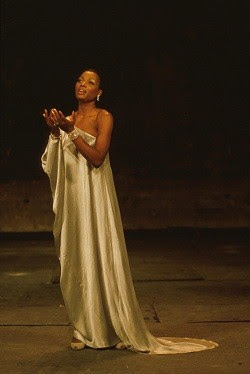
Wilhelmenia Fernandez as Cynthia Hawkins

Richard Bohringer as Gorodish

Roland Bertin as Weinstadt


Summary


"Diva" is a 1981 French thriller film directed by Jean-Jacques Beineix, adapted from Daniel Odier’s novel "Diva" under the pseudonym Delacorta. This film is one of the early French films that abandoned the realistic atmosphere of French cinema in the 1970s and returned to the colorful and melodic style that was later described as “cinéma du look”.

After a successful debut in France in 1981, it also had success in the U.S. the next year. The film became a cult classic and received international acclaim.


Movie Review


Great, weird plot - and everything else is even better”

Super cool thriller/art film. One of the most stylish movies ever made”

Stylish, charming, and always original”

Beautiful visuals, sounds, performances”

The rich colors and soundtrack make this movie great”

A French 1980's thriller romance”

Intriguing thriller”

Cult classic worth watching”

"It creates a nice ambiance”

Stylish masterpiece”


Interesting stories about the film


1. The producers were looking for an actress who matches the description of Cynthia Hawkins (the Diva), a beautiful black American woman who sings a perfect operatic soprano, and speaks both English and French fluently, in the original novel "Diva". They attended Carmen's performance to get acquainted with opera performers, and Wilhelmenia Fernandez played the title role in the opera.


Wilhelmenia Fernandez


2. This film is based on Delacorta’s book "Diva," which is part of a series of stories in which Alba and Gorodish are the main characters.


Novel "Diva", Daniel Odier (1979)


3. The fictional protagonist in this film is said to have been inspired by famous opera diva Jessye Norman.


Jessye Norman


4. Wilhelmenia Fernandez did her own singing in this film.

5. This was the first film role for Wilhelmenia Fernandez. She also appeared in the TV production program "La Bohème (1980)".

6. This was the first feature film directed by Jean-Jacques Beineix.


Jean-Jacques Beineix


Thank you.


Movie Trailer

Amazon Author Page

Lecture Program List

YouTube

Korean Blog

Naver TV

Naver Post


Sunday, May 2, 2021

The Works by Amedeo Modigliani: 87. Little Girl in Black Apron (1918)


How are you?

Modigliani Institute Korea (MIK) is currently introducing artworks of Amedeo Modigliani.

The 87th work to introduce for this week is “Little Girl in Black Apron” in 1918.

This work is an expressionist style portrait and an oil painting on canvas with the size of 92.5 x 60.5 cm and housed in the Kunstmuseum Basel in Basel, Switzerland.


Kunstmuseum Basel, Basel, Switzerland


Modigliani's 1918 paintings appear a series of children, which is no coincidence. The reason for this is that during Modigliani's stay in southern France, there were neither portrait commissions nor the models such as Zborowski had paid in Paris. As a result, Modigliani was free to choose the subject for his paintings, whether as adults or children. 


Portrait of Leopold Zborowski, Amedeo
Modigliani (1917)


Examples of paintings for adults at the time include “Seated man with a cane” and “A beautiful grocer”. Modigliani, who spent his childhood amid families with many children in his hometown of Livorno, may have recalled his childhood, painting innocent children. 


Seated Man with a Cane, Amedeo Modigliani
(1918)


A Beautiful Grocer, Amedeo Modigliani
(1918)


In this painting, the pose of the little girl with big eyes looks a little stiff and awkward, but in another painting of the same little girl, “Two little girls,” she looks more comfortable. 


Two Little Girls, Amedeo Modigliani (1918)


The little girl's black outfit stands out with some embroidery at the bust, and her black apron and the chest of drawers serve to add horizontal lines to the paintings. Also, the black book on the drawers suggests that the little girl is a wise and studious child.


Thank you.


Amazon Author Page

Lecture Program List

YouTube

Korean Blog

Naver TV

Naver Post


🎨 🎵 “The Quiet Gothic”: Turning Grant Wood’s “American Gothic” Into Music

"Every masterpiece has a melody. Welcome to Melodies on Canvas." What kind of music would you hear if you could listen to a pa...