Author, Lecturer, Broadcaster & Cultural Arts Expert;
President of Art Collage JANG/J Music/J Art/J Books & Media.
Author of over 40 books published on Amazon, including The Crimson Horror series and The Great and Immortal Painters’ Stories series.
Dedicated to sharing insights into art, culture, literature, and creative expression through writing, lectures, media, and content creation.
This
week's lecture is “Origin”, the 2nd topic of “Blues”, which is a summary of the contents
of “111. Blues: 2. Origin”
introduced on November 15th, 2017.
Currently,
the exact origin and year of origin of the music now known as blues is
difficult to pinpoint, primarily because the associated music style has evolved
over a long period of time before it was fully documented as the current blues
style.
The
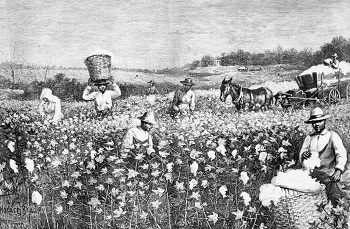
earliest blues-like music was a call-and-response style without accompaniment
or harmony and unbounded by the form of a specific musical structure, and this
music expanded into simple solo songs with emotional content, transforming
African slave’s field shouts and field hollers. Many of these blues elements,
such as the call-and-response form, can have their origins in African music.
Field
holler music was an early form of African American music, described in the 19th
century, and field hollers laid the foundations for the blues, spirituals, and
ultimately rhythm and blues.
The
most important precedent for blues music in America was spiritual, a form of
religious song rooted in the camp meetings of the Great Awakening of the early
19th century. Spirituals, in the form of passionate songs, conveyed to
listeners a feeling of rootlessness and misery, like the blues. However, unlike
blues, spirituals were less concerning the performer but about the general
loneliness of mankind. Despite these differences, however, blues and spirituals
are so similar that they cannot be easily separated, and perhaps if the term
“blues” was used at the time, many spirituals would have been called blues.
The
social and economic reasons for the emergence of the blues are not fully known.
Blues has evolved from an unaccompanied vocal music of poor black laborers into
a variety of styles and sub-genres across the United States, with regional
variations. African American work songs were an important precursor of the
modern blues, including the songs sung by laborers like stevedores and
roustabouts, and the field hollers and shouts of slaves.
It is difficult to define
exactly when the blues first appeared, but it is often mentioned between 1870
and 1900. This period coincides with the transition of agriculture system from
slavery to sharecropping and small-scale agricultural production, following the
emancipation of the slaves in the southern United States, and the development
of the blues was associated with these newly acquired freedoms of the slaves.
One
of the major reasons for the lack of data on the origins of the blues is that
the wandering tendency of the earliest blues musicians resulted in leaving
little or no records of what sort of music they played or where it came from.
Blues was generally regarded by the upper- and middle-classes as lower-class
music, unsuitable for documentation, study, or enjoyment.
This
week's lecture is “Overview”, the 1st topic of “Blues”, which is a summary of the contents
of “110. Blues: 1. Overview”
introduced on November 11th, 2017.
Blues
is a music genre and musical form that originated in the southern United States
around the 1860s by African-Americans as a music rooted in African-American
work songs and spirituals. Blues includes spirituals, work songs, field
hollers, shouts, chants, and rhymed simple narrative ballads. The blues form,
found in jazz, rhythm and blues and rock and roll, is characterized by the
call-and-response pattern, the blues scale and specific chord progressions, of
which the twelve-bar blues is the most common.
In
addition, the blue notes, which refers to the scale in which the thirds and
sevenths are lowered by a semitone in the diatonic scale of Western music, is
also an essential part of the blues sound.
Blues
as a genre is also characterized by its lyrics, bass lines and instrumentation.
Early traditional blues verses consisted of a single line repeated four times,
and it was during the first decades of the 20th century that the current
structure became standard. Early blues was a loose narrative form related to
racial discrimination and many of the difficulties experienced by
African-Americans.
The
origins of many elements, such as the call-and-response format and the use of
blue notes, date back to African music, and the origins of blues are also
closely related to the spirituals, the religious music of the African-American
community. The first appearance of blues dates back to juke joints, associated
with the newly acquired freedom of the former slaves, that developed after
slavery was over. According to chroniclers, reports about blues music began in
the early 20th century, and the first blues sheet music was published in 1908.
Since then, blues has evolved from unaccompanied vocal music and oral
traditions of slaves into a variety of styles and subgenres. Blues subgenres
include country blues such as Delta blues and Piedmont blues and urban blues
styles such as Chicago blues and West Coast blues. World War II marked the
transition from acoustic blues to electric blues and the progressive opening of
blues music to a wider audience, especially white listeners. A hybrid form
called blues rock, which mixed blues style with rock music, was developed in
the 1960s and 1970s.